

⬅ George Washington: Presbyopia Saves the United States

presbyopia
Presbyopia (the need for reading glasses) affects all humans as they age. Presidents are no
exception. An argument can be made, however, that Washington's presbyopia saved the United
States of America
SEE BELOW
1a.
More...
Between the great military victory at Yorktown in 1781 and the surrender of
the British in 1783, the American Revolution almost unraveled. It's little
mentioned in schoolbooks, so it will help to set the mood.
The crisis came in February-March 1783:
- The officers of the Continental Army were on the brink of revolt, and were ready to take the law into their own hands. They were not being paid, and would not be paid in the future -- Congress was bankrupt. By June, the Army would have to take what it needed at bayonet point.
- Members of the business community were sympathetic with the Army. They, too, were owed large sums of money by the bankrupt government.
- State political leaders were also sympathetic. Their power would shrink if a single, united nation emerged from the Revolution, instead of 13 separate nations.
- General Washington's command was in danger. A Congressman wrote him, saying that elements in the Army were using "sinister practices" to tear down Washington's reputation, so that "the weight of your reputation will prove no obstacle to their ambitious designs."
- Recognizing the impending chaos, other forces saw only one hope, and urged Washington to become King of the United States.
Washington saw anger and resentment on the faces of the officers. After his prepared remarks, the faces had changed little. He had clearly failed to sway them. Flexner describes what happened next: 1b
[Washington] remembered he had brought with him a reassuring letter from a congressman. He would read it. He pulled the paper from his pocket, and then something seemed to go wrong. The General seemed confused; he stared at the paper helplessly. The officers leaned forward, their hearts contracting with anxiety. Washington pulled from his pocket something only his intimates had ever seen him wear: a pair of eyeglasses. "Gentlemen," he said, "you will permit me to put on my spectacles, for I have not only grown gray but almost blind in the service of my country."This homely act and simple statement did what all Washington's [prepared] arguments had failed to do. The hardened soldiers wept. Washington had saved the United States from tyranny and civil discord.
Cited Sources
- Flexner, James Thomas. Washington: The Indispensible Man. Boston: Little, Brown, 1974.
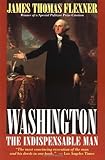 a pp.165-175 b p.174Comment: Distillation of Flexner's four-volume biography of Washington published from 1965 to 1972.
George Washington · John Adams · Thomas Jefferson · James Madison · James Monroe · John Q. Adams · Andrew Jackson · Martin van Buren · William Harrison · John Tyler · James Polk · Zachary Taylor · Millard Fillmore · Franklin Pierce · James Buchanan · Abraham Lincoln · Andrew Johnson · Ulysses Grant · Rutherford Hayes · James Garfield · Chester Arthur · Grover Cleveland · Benjamin Harrison · Grover Cleveland · William McKinley · Theodore Roosevelt · William Taft · Woodrow Wilson · Warren Harding · Calvin Coolidge · Herbert Hoover · Franklin Roosevelt · Harry Truman · Dwight Eisenhower · John Kennedy · Lyndon Johnson · Richard Nixon · Gerald Ford · James Carter · Ronald Reagan · George Bush · William Clinton · George W. Bush · Barack Obama · Donald Trump · Joseph Biden